Wills & Inheritance

Wills & Inheritance

From drafting wills to handling inheritance procedures,
we help ensure your family's wishes are carried out with certainty.

✓ Free Initial Consultation ✓ Nationwide Service ✓ Evenings & Weekends OK
🌐
Online Consultations
We primarily work via Google Meet and phone. Consultations available from anywhere in Japan.
📋
Future-Focused Will Drafting
We create reliable wills that account for your family's long-term future.
🤝
One-Stop Support
Leave coordination with attorneys, tax accountants, and judicial scriveners to us.

Why is a Will Necessary?

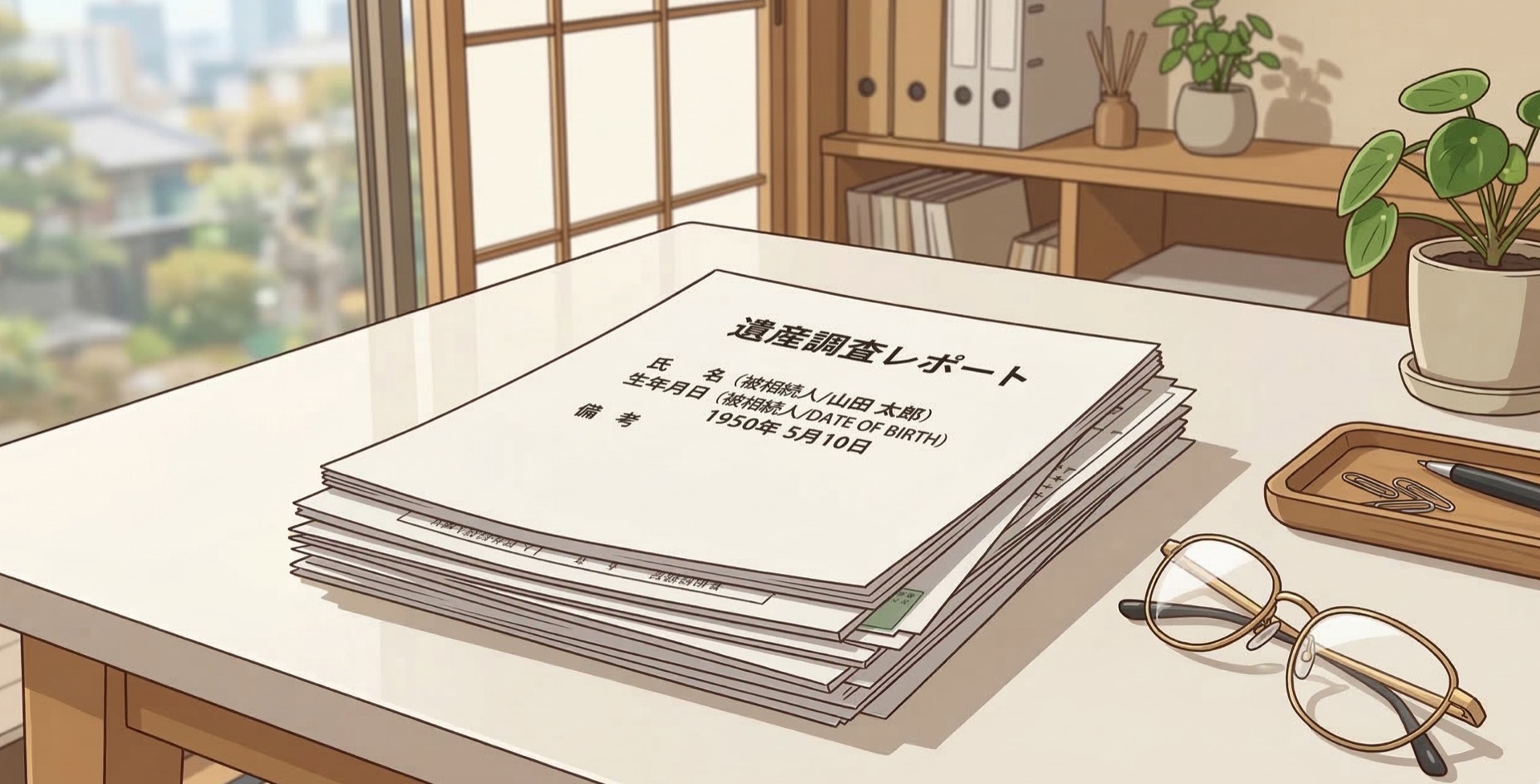
Will preparation

Without a will, an estate is distributed according to the statutory shares of inheritance prescribed by the Civil Code (Article 900). However, statutory inheritance does not reflect the individual's personal wishes about "who should receive what."

By creating a will, you can designate distributions that differ from the statutory shares, or leave assets to individuals who are not legal heirs (Civil Code, Article 902).

We especially recommend creating a will if you fall into any of the following categories:

  • Married couples without children (since both the spouse and siblings become heirs)
  • Individuals who have remarried and have children from a previous marriage
  • Cases where relationships among heirs are complicated
  • Those who wish to leave more to a specific person, or make a bequest to a non-heir
  • Business owners who wish to designate a successor
Types of Wills

Under the Civil Code (Article 967), there are three types of ordinary wills. Each has different formal requirements, and we will recommend the most suitable type for your situation.

Holographic Will (Jihitsu Shosho Yuigon)

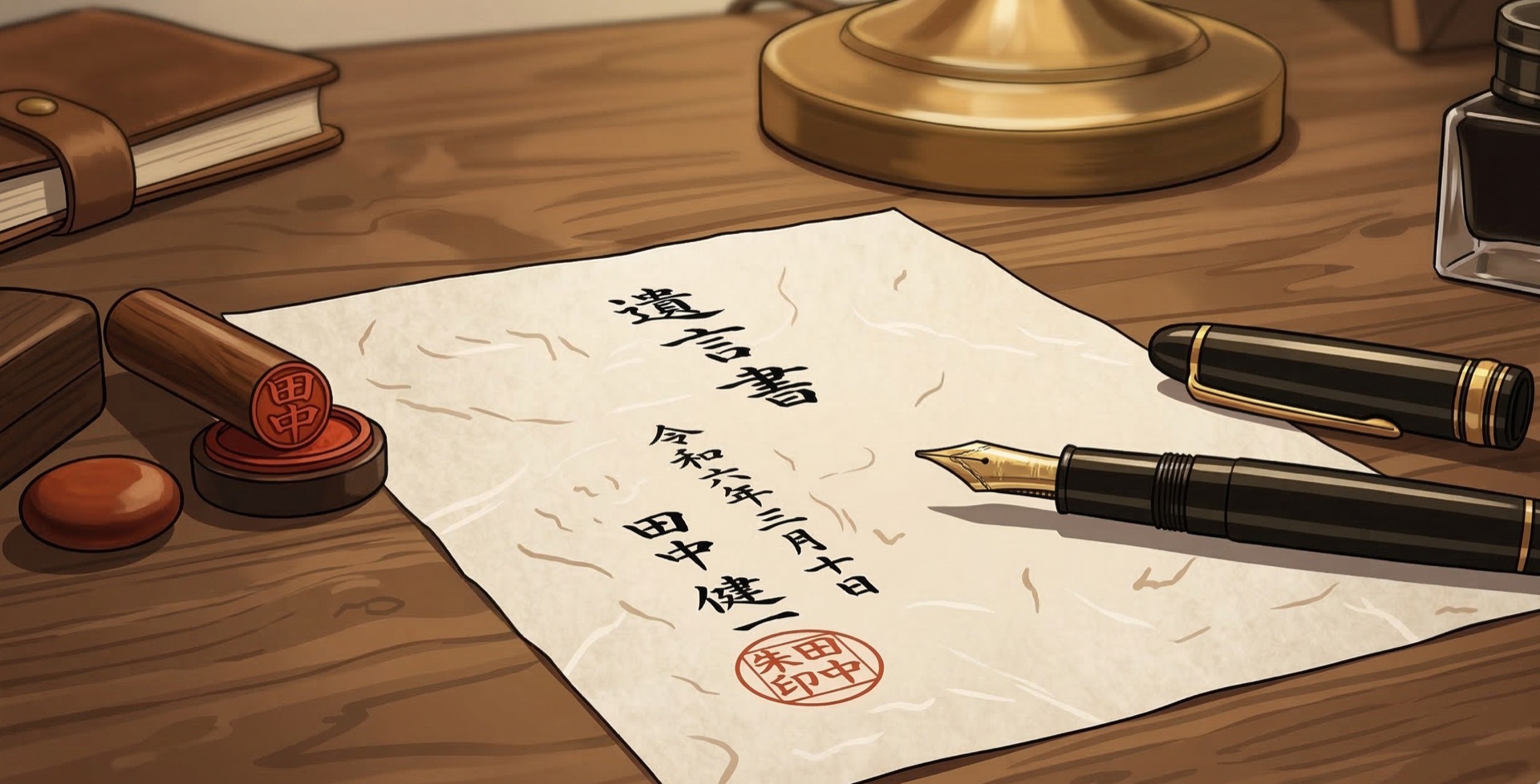
A will in which the testator writes the entire text, date, and name by hand and affixes a seal (Civil Code, Article 968). This is the easiest to prepare, but there is a risk of invalidity due to formal deficiencies.

Point The property inventory may be prepared by computer or as copies of bank books (each page must be signed and sealed)

Notarized Will (Koseishosho Yuigon)

A will prepared by a notary public and kept at the notary office (Civil Code, Article 969). In the presence of two or more witnesses, the testator dictates the content, which the notary records in writing. This is the most reliable format, with no risk of loss or tampering.

Point Our office can serve as a witness and handle coordination with the notary office

Secret Will (Himitsu Shosho Yuigon)

A will where the content remains secret while a notary public certifies its existence (Civil Code, Article 970). The testator signs and seals the document, places it in a sealed envelope, and presents it before a notary and two or more witnesses.

Point May be typed or written by another person, but this format is rarely used in practice

Holographic Will Storage System (Legal Affairs Bureau Storage)

Since July 2020, a system has been in place for storing holographic wills at the Legal Affairs Bureau. The storage fee is 3,900 yen. This eliminates concerns about loss or tampering, and also makes the family court probate procedure unnecessary (which is normally required for holographic wills under Civil Code, Article 1004).

*The Legal Affairs Bureau only checks the external format of the will. It does not guarantee the legal validity of the content, making professional support at the drafting stage important.

Basics of Inheritance Procedures

Family discussion

When an inheritance occurs, various procedures become necessary. Since many have strict deadlines, it is important to act promptly.

Statutory Heirs and Statutory Shares (Civil Code, Articles 887–890, 900)

The spouse is always an heir. Other heirs are ranked in the following order of priority:

  • First priority: Children — Spouse receives 1/2, children receive 1/2 (divided equally among multiple children)
  • Second priority: Direct ascendants (parents, etc.) — If there are no children. Spouse receives 2/3, direct ascendants receive 1/3
  • Third priority: Siblings — If there are no children or direct ascendants. Spouse receives 3/4, siblings receive 1/4

Reserved Portion (Iryubun) (Civil Code, Articles 1042–1048)

The reserved portion is the minimum share guaranteed to heirs that cannot be overridden even by a will. The reserved portion is 1/3 of the estate if only direct ascendants are heirs, or 1/2 in all other cases. An heir whose reserved portion has been infringed may claim monetary compensation from the recipient (reserved portion infringement claim, Civil Code, Article 1046). This right expires 1 year after the heir becomes aware of the inheritance and the infringement.

Estate Division Agreement (Civil Code, Article 907)

When there is no will, or when a will does not cover all assets, all heirs must discuss and agree on how to divide the estate. This is called an estate division agreement (isan bunkatsu kyogi).

Once an agreement is reached, it is documented in an estate division agreement document, signed and sealed (with registered seals) by all heirs. This document is essential for procedures such as transferring real estate titles and closing bank accounts.

Family registry and document collection

How We Can Help

01

Will Drafting & Document Preparation

We listen to your wishes and draft a will that meets all legal requirements under the Civil Code. For notarized wills, we also coordinate with the notary office in advance.

02

Heir Investigation (Family Registry Collection)

We obtain all family registries from the decedent's birth to death to identify all statutory heirs. We also prepare a diagram of inheritance relationships.

03

Estate Inventory Preparation

We investigate and organize all inherited assets — including real estate, bank accounts, securities, and debts — into a comprehensive inventory.

04

Estate Division Agreement Drafting

We accurately document the agreement of all heirs, specifying "who" receives "which assets" and "in what proportion."

05

Name Transfer & Administrative Procedures

We handle various post-inheritance procedures on your behalf, including closing or transferring bank accounts and vehicle registration transfers.

06

Witness for Notarized Wills

We serve as one of the required witnesses (two or more) for the creation of a notarized will. Presumptive heirs and beneficiaries cannot serve as witnesses (Civil Code, Article 974), so an administrative scrivener fills this role.

Collaboration with Other Professionals

The following tasks fall within the exclusive jurisdiction of other professionals. We will refer you to trusted specialists as needed:

  • Disputes, mediation, and negotiations among heirs — Attorney (Lawyers Act, Article 72)
  • Real estate inheritance registration (title transfer) — Judicial scrivener (Judicial Scriveners Act, Article 3)
  • Inheritance tax filing and quasi-final tax returns — Tax accountant (Certified Tax Accountants Act, Article 2)

*Our services are provided on the assumption that amicable discussions take place among all heirs.

Need help with will preparation or inheritance procedures? Feel free to reach out for a consultation.

Free Consultation

Pricing

Will Preparation

Holographic Will Drafting

¥50,000 + tax ~
Inheritance Procedures

Heir Investigation &
Family Registry Collection

¥50,000 + tax ~
Inheritance Procedures

Estate Division Agreement Drafting

¥80,000 + tax ~

*Fees may vary depending on the nature of the assets and the number of heirs. Please request a detailed estimate.
*For notarized wills, notary office fees are charged separately.

Frequently Asked Questions

About Wills

At what age can a person make a will?

Under the Civil Code (Article 961), anyone who has reached the age of 15 may make a will. However, the person must have the mental capacity to clearly express their intentions at the time the will is made (Civil Code, Article 963).

Which is better — a holographic will or a notarized will?

If certainty is your priority, we recommend a notarized will. Since it is prepared by a notary public, there is no risk of formal deficiencies, and the original is stored at the notary office, eliminating concerns about loss or tampering. On the other hand, if cost is a consideration, combining a holographic will with the Legal Affairs Bureau storage system is also an option. We will recommend the best approach based on your situation.

Can a will be changed or revoked once it is made?

Yes, a testator may revoke a will in whole or in part at any time (Civil Code, Article 1022). Also, if a new will contains provisions that conflict with a previous will, the conflicting portions of the earlier will are deemed revoked.

About Inheritance Procedures

What should I do first when an inheritance occurs?

First, check whether a will exists. Next, collect family registries to identify all statutory heirs and investigate the estate. If you wish to renounce your inheritance, you must file with the family court within 3 months of learning of the inheritance, so we recommend consulting early.

What happens if the heirs cannot reach an agreement on estate division?

If discussions fail to produce an agreement, the matter may be brought to the family court for mediation or adjudication (Civil Code, Article 907, Paragraph 2). Our office provides support on the assumption that heirs will reach an amicable agreement.

Are debts also inherited?

Yes, not only positive assets but also debts are inherited. If debts exceed assets, you can file a renunciation of inheritance within 3 months of learning of the inheritance to relinquish all inheritance rights. There is also an option called qualified acceptance, which limits your liability for debts to the value of the positive assets inherited.

Wills & Inheritance Consultation

"I don't know how to write a will." "The inheritance procedures are too complicated." —
You don't have to figure it out alone. Feel free to reach out.
Messages accepted evenings & weekends. We typically respond within 24 hours.

03-5856-8157 Hours: Weekdays 9:00 – 18:00 (JST)