Spouse Visa Review Standards:
Credibility, Stability & Conduct
3 Criteria Immigration Examines
"Is it a sham marriage?" "Can they sustain their life?" "Is the applicant a problematic foreigner?"
The applicant must prove all three points themselves.
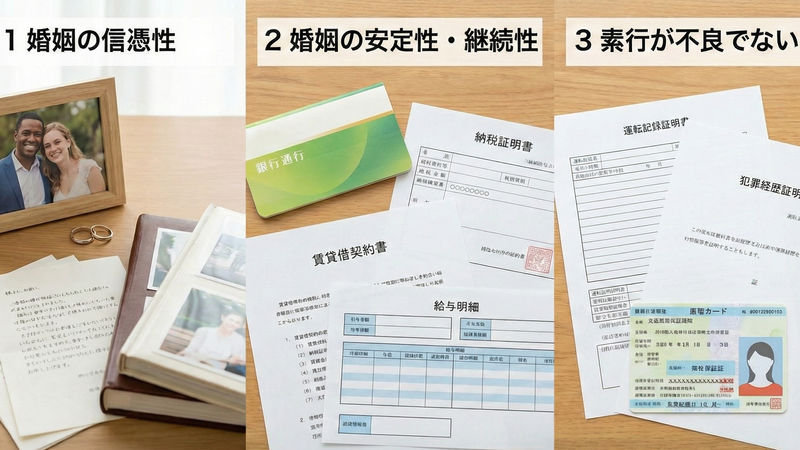
1. Credibility of Marriage
- Legally valid marriage (certificates from both countries)
- Cohabitation (residence certificate, rental contract)
- Consistent relationship history (photos, chat logs)
- Ability to communicate (common language)
2. Stability & Continuity
- Sufficient household income (tax/income certificates)
- Savings (bank statement copies)
- Family financial support if insufficient
3. Good Conduct
- No unpaid taxes, pension, or insurance premiums
- No traffic violations or legal infractions
- Clean immigration history (no work hour violations, etc.)
- Absolutely NO false statements!
[Important] Lies will ALWAYS be discovered
Honestly explaining unfavorable facts and showing remorse and corrective measures is the fastest path to approval.
First, the "spouse visa" we refer to here is the residence status required for foreign nationals who have married a Japanese national or permanent resident to live in Japan.
The review focuses on these 3 main areas.
1. Credibility of the Marriage
You must prove on your own that this is a genuine marriage, not merely a "sham marriage" for visa purposes.
Cohabitation
This is a fundamental principle. Verified through residence certificate. If planning to cohabit, proof such as a rental agreement for the new home is needed.
Relationship and Marriage History
Explain the detailed story from meeting to marriage and submit evidence such as photos and message history.
Communication Means
What language do you communicate in? If communication is impossible, married life is deemed difficult and sham marriage is suspected.
2. Stability and Continuity of Marriage
Whether the marriage can continue stably from an economic perspective, assessed mainly through "financial stability."
- Past year's income: Household income checked through tax/income certificates.
- If income cannot be proven: Submit bank statements, pay slips, employment condition notices, etc.
- If income is low: Submit proof of parental support (letter of consent, parents' bank statements) or explain future recovery prospects.
3. Good Conduct
Whether you can live in accordance with Japanese society's rules is important.
Common examples of "poor immigration history"
- Non-status activity violations (overwork)
- Failure to file notifications (address change, job change)
- Unpaid pension, health insurance, or taxes
[Absolute Rule] Do NOT make false statements
Never make false statements on your application. This may constitute "fraudulent acquisition of residence status" under the Immigration Control Act, leading to visa revocation and serious disadvantages in future applications.
If there are unavoidable circumstances, explain honestly and submit a letter of reflection with evidence. Approval may still be possible.
Summary
Past conduct issues cannot be undone, but sincere responses can sometimes open the way.
If you have concerns about your immigration history, we strongly recommend consulting a specialist, including the option of reapplying after returning to your home country.
Need help with this procedure?
Free 30-minute initial consultation. Online support nationwide and from overseas. Evenings and weekends available.